


Digital transformation in manufacturing often begins with the implementation of powerful platforms such as Windchill PLM and a robust ERP system. On paper, the technological landscape looks complete: engineering manages product structures and revisions in Windchill PLM, while operations, procurement and finance rely on ERP to plan and execute production.
However, in many industrial organizations these systems do not truly operate as one.
When Windchill PLM and ERP are not properly integrated, the gap between engineering and operations quickly becomes a structural weakness. What initially appears to be a technical limitation gradually turns into an operational problem that affects cost control, product quality and time-to-market.
The operational risk of disconnected systems
Modern product development is significantly more complex than it was just a decade ago. Companies design products that combine mechanical components, electronics and software while coordinating engineering teams, suppliers and manufacturing sites across multiple locations and time zones.
In this context, product information cannot remain isolated inside engineering tools.
When Windchill PLM operates independently from ERP, the organization begins to fragment. Engineering defines product structures and revisions in Windchill PLM that production may not immediately see reflected in ERP, while manufacturing teams update operational data that rarely flows back into engineering environments. Procurement and finance may therefore work with cost or planning data that does not fully match the latest design reality.
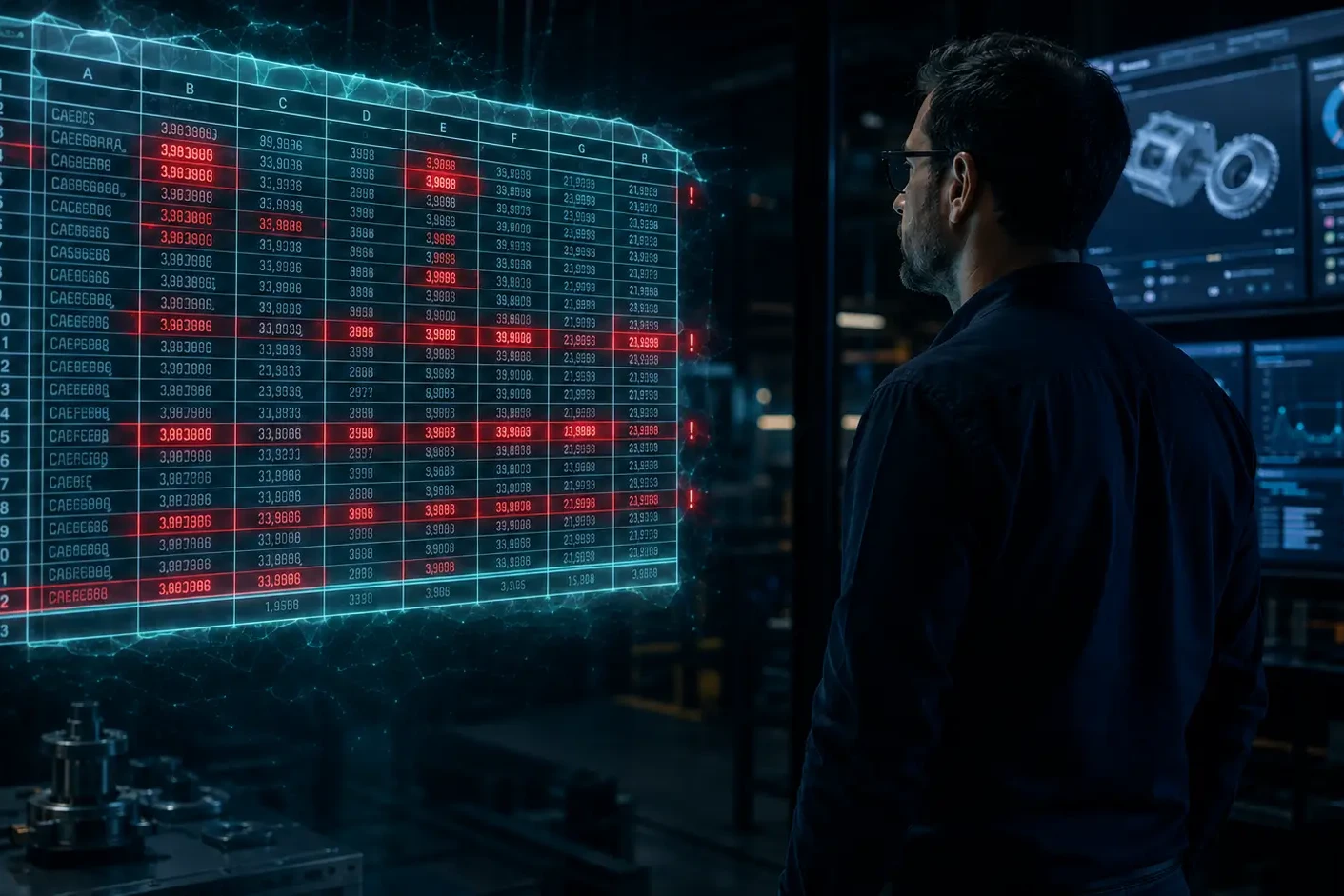
The result is not immediate chaos, but a gradual accumulation of inefficiencies. Manual exports, spreadsheet bridges, duplicated data entries and email confirmations become routine practices that compensate for the lack of system synchronization.
Over time, these workarounds create a fragile operational model that slows the organization down.
BOM inconsistencies: the most visible symptom
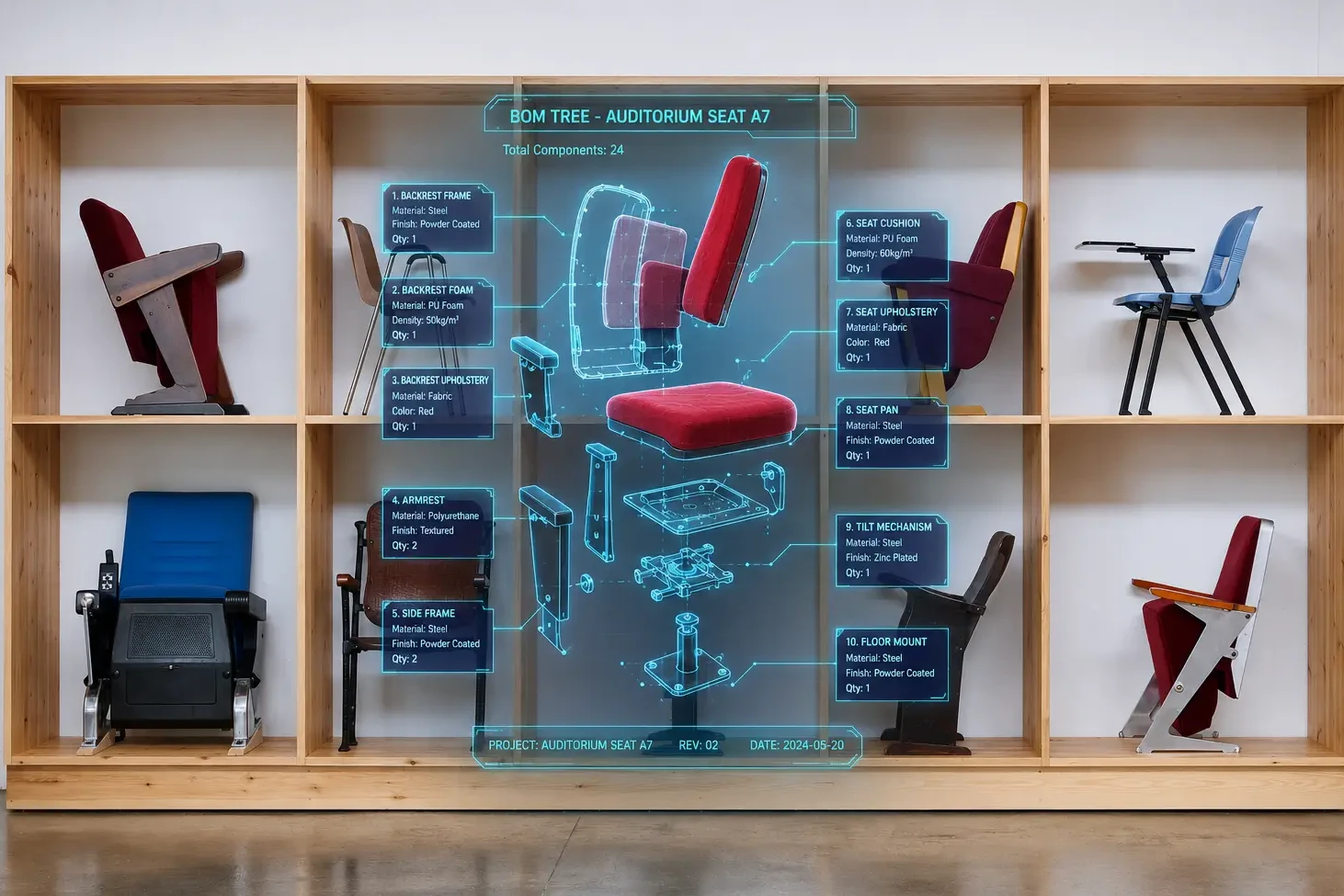
One of the areas most affected by the lack of integration between Windchill PLM and ERP is the Bill of Materials. The BOM represents the backbone of manufacturing operations, connecting engineering design with procurement, planning and production.
When BOM structures or revisions must be transferred manually between Windchill PLM and ERP, inconsistencies inevitably appear. A component revision may be outdated, a variant configuration may be incomplete, or a manufacturing process may not reflect the most recent engineering change.
These inconsistencies quickly move beyond the system and into the shop floor. Production errors increase, rework becomes more frequent and inventory levels grow unnecessarily because outdated or incorrect data drives operational decisions.
What initially appears to be a minor data synchronization issue can therefore translate into measurable financial impact and operational inefficiency.
Engineering changes without synchronization
Engineering Change Notices and Engineering Change Orders are essential for controlling product evolution. Windchill PLM provides the structure and traceability needed to manage these changes, but the benefits disappear if the changes are not automatically synchronized with ERP.
Without integration, production may continue manufacturing based on obsolete revisions while procurement orders components tied to previous versions of the product. Project schedules may also fail to reflect the real impact of engineering modifications.
In global manufacturing environments where production operates continuously, this lack of synchronization increases operational risk and complicates compliance and traceability requirements.
More importantly, it undermines confidence in enterprise data. When teams cannot fully trust the information available in their systems, decision-making slows down and additional validation steps become necessary before moving forward.
The hidden impact on time-to-market
Many organizations believe their time-to-market challenges come from product complexity or limited resources. In reality, the underlying problem is often data inconsistency between Windchill PLM and ERP.
Before launching a product, teams frequently spend significant time verifying that engineering data and manufacturing structures match across systems. They review BOM revisions, validate routing information and manually reconcile discrepancies that appear between platforms.
These activities do not contribute to innovation or product improvement. Instead, they compensate for disconnected systems.
When Windchill PLM and ERP are properly integrated, synchronization becomes automatic and the number of data errors decreases significantly. As a result, product launches move faster because teams can focus on engineering and manufacturing decisions instead of resolving system inconsistencies.
Integration as a strategic capability
Integrating Windchill PLM with ERP is not simply a technical improvement but a fundamental step toward operational coherence. When engineering, manufacturing and business systems are properly connected, product information flows consistently across the organization and teams can rely on a single source of truth.
This alignment allows companies to reduce errors, improve collaboration and accelerate decision-making while maintaining full traceability of product and manufacturing data.
In modern manufacturing environments where complexity continues to grow, the integration between Windchill PLM and ERP has become a critical capability rather than an optional improvement. Organizations that succeed in connecting these systems are not only improving their IT architecture; they are strengthening the foundation that supports their entire product lifecycle and operational performance.
This is precisely the role of ISFsoft Connect. Designed as an integration platform between Windchill PLM and ERP systems, ISFsoft Connect enables organizations to synchronize product data, engineering changes, manufacturing structures and operational information across systems in a controlled and traceable way. By creating a reliable bridge between engineering and operations, companies can eliminate manual data transfers, reduce inconsistencies and ensure that product information flows seamlessly across the entire organization.